Why Being Rooted at the Source is the New Standard
, min read
By roasting and packing right here in Tanzania, we catch the harvest at its best and keep the value where the coffee is born.
02
Terroir
How the Lake and the Ridges Change the Flavor
, min read
The cherries grow in a way that creates a deep sweetness, giving a balanced cup that feels like the steady rhythm of the lake.
03
Ritual
Why the Morning Ritual Matters
, min read
We believe that this moment is the most important part of your day, a chance to slow down before the world asks for your attention.
04
Terroir
The Fully Washed Process: Why Water Reveals True Flavor
, min read
The most honest way to tell the truth about a coffee. From tank to drying bed, the precision behind every clean cup.
05
Origin
What SCA 85+ Means in Your Cup
, min read
A score above 85 is not luck. What specialty grade actually means and why it matters from farm to your morning cup.
06
Terroir
Growing at Altitude: How Elevation Changes Everything
, min read
Why slow ripening at 1,800 metres produces a more complex cup than anything grown in the warm lowlands ever could.
07
Origin
The Farmers of the Great Lakes: Hands Behind the Harvest
, min read
The knowledge of when to pick, how to ferment, how long to dry. It lives in the people who learned it from their parents.
08
Ritual
The Right Grind: The Most Overlooked Step in Your Ritual
, min read
The single change that makes the biggest difference to your cup, and why most people rush right past it every morning.
09
Ritual
Cold Water, Better Coffee: The Variable Nobody Talks About
, min read
Water is not just a carrier. Its mineral content actively shapes extraction, and most people never think about it.
Origin, min read
Why Being Rooted at the Source is the New Standard
The coffee you buy today was likely picked somewhere in the tropics, shipped green across an ocean, and roasted in a facility thousands of miles from the farm. By the time it reaches your cup, the coffee has traveled further than most people. Something real gets lost in that distance.
Tanzania · Great Lakes Region · The Source
At IZA RITUAL, both Nyanza Estate and Highland Reserve are roasted in Tanzania, as close to the source as the supply chain allows. This is not a marketing detail. It is a decision about what the coffee is allowed to keep. Coffee is a living crop. From the moment the cherry is processed, its most volatile compounds begin to fade. The caramel depth of the lakeside plateau, the bergamot edge of the summit ridge — that character softens with every kilometre it travels. By staying close to the land, we intercept the coffee at its most expressive.
"The best version of a coffee exists closest to where it was grown. Distance is always a compromise."
There is also something that belongs to the people of the Great Lakes Region. The knowledge, the craft, the generations of learning how to read this specific soil and altitude — that stays here, in the community that built it. When you open a bag of Nyanza or Highland, you are receiving the actual work of that place. Not a translated copy. The value stays where the coffee is born.
Find Your Ritual.
Terroir, min read
How the Lake and the Ridges Change the Flavor
The Great Lakes Region of Tanzania holds one of the most geographically dramatic coffee-growing areas in East Africa. Within a single drive, the landscape shifts from the still, humid lakeside plateaus bordering Lake Victoria to the cold, mist-covered ridges of the Southern Highlands. For coffee, this difference is written directly into the cup.
Nyanza Estate, our Lakeside Plateau Selection, grows between 1,200 and 1,500 metres above sea level. At this elevation, the climate is warm and consistent. The volcanic soil around the lake is dense with accumulated minerals — iron, potassium, phosphorus — that the plant draws on through the growing season. The cherry has time and nourishment. It ripens into a generous sweetness. This is where the caramel notes come from, and the long, still finish that settles like calm water.
"The same Arabica species. The same fully washed process. The elevation between plateau and summit accounts for everything that differs."
Highland Reserve, our Summit Ridge Microlot, grows considerably higher — between 1,800 and 2,200 metres. Up here the air thins and the nights turn cold. The cherry slows down, works harder, takes its time. That slow ripening is where the interesting chemistry happens: the sugars develop differently, the cell walls of the bean grow denser, and what emerges is a coffee with a taut, focused acidity — bergamot, citrus — and a deep cocoa weight beneath it. The same species. The same craft. Entirely different terroir, entirely different cup.
Find Your Ritual.
Ritual, min read
Why the Morning Ritual Matters
Before anything else arrives — before the notifications, the schedules, the obligations — there is a window. The water is heating. The room is quiet. The whole day is still ahead, unspent. What you put into that window matters. Not because of caffeine or productivity, but because of attention.
The morning ritual · IZA RITUAL
The act of preparing a real coffee — grinding whole beans, measuring by weight, pouring deliberately — requires you to be present. That kind of presence is increasingly rare. It is worth protecting. Both Nyanza Estate and Highland Reserve are designed for methods that reward this patience: pour-over, Aeropress, French press. Slow methods, deliberate pours, results that depend on the care you bring to them.
"The ritual is not the cup. The ritual is the act of making it."
There is something else worth knowing about where these coffees come from. The Great Lakes Region of Tanzania moves at a different pace. The farmers who tend Nyanza Estate work the same volcanic plateaus their parents worked. The pickers who harvest Highland Reserve know those high ridges the way you know a familiar room — by touch, by light, by season. That patience — the patience of the land and the people on it — arrives in your cup every morning. You do not need to know the geography for it to matter. But knowing it changes the ritual.
Find Your Ritual.
Terroir, min read
The Fully Washed Process: Why Water Reveals True Flavor
There are many ways to turn a coffee cherry into something you can brew. Some producers dry the whole fruit in the sun. Others use machines to strip away the skin. At IZA RITUAL we use the fully washed process and we believe it is the most honest way to tell the truth about a coffee.
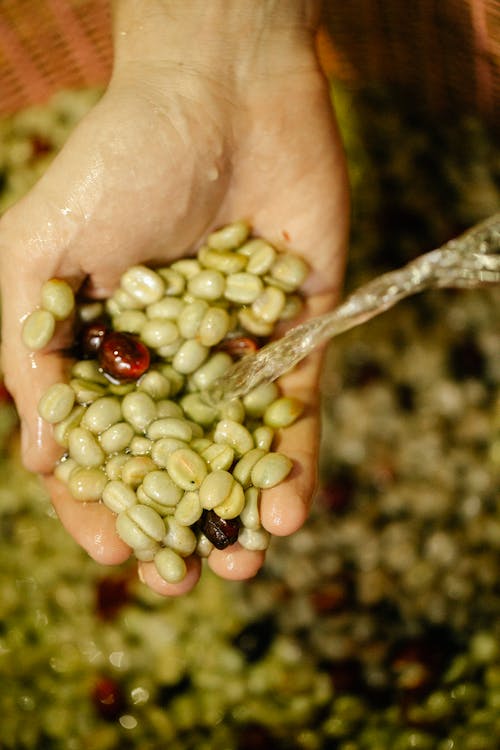
Here is the short version of what happens. When the cherries come in from the picking they go into a tank of water. The ripe ones sink and the unripe ones float. This first step alone is a kind of quality filter that most drying methods cannot do. After that the skin is removed and the beans are left to ferment in water for a day or two. This is where the flavor starts to unlock.
The washing station · Great Lakes Region · Tanzania
The fermentation breaks down the sticky fruit layer around the bean. It is a precise window. Too little time and the flavors are flat. Too much and the coffee takes on a sharp edge that masks everything else. Our producers know this by touch and by taste in a way that you can only learn from years on the same land.
After fermentation the beans are washed again with fresh water. Clean. Multiple rinses. Then they go onto raised drying beds where air moves around every single bean for weeks.
Raised drying beds · Natural air circulation · Great Lakes Region
"The fully washed process uses more water and takes more skill. But the result is a cup that is clean and clear enough to actually taste the terroir."
What you end up with is a cup that is clean and bright. When you taste Nyanza Estate you are tasting the soil and the altitude without any fruit sweetness from the drying process getting in the way. The coffee tells the truth. That is exactly what we want.
Find Your Ritual.
Origin, min read
What SCA 85+ Means in Your Cup
If you spend any time reading about specialty coffee you will see the number 85 come up a lot. Coffees that score 85 or above on the Specialty Coffee Association scale are considered specialty grade. Both Nyanza Estate and Highland Reserve hit that mark. But what does that actually mean when you are standing in your kitchen at six in the morning?
The SCA cupping score is the result of a formal tasting process. Trained professionals called Q-graders evaluate a coffee against ten criteria. Fragrance. Aroma. Flavor. Aftertaste. Acidity. Body. Balance. Uniformity. Clean cup. Sweetness. Each one is scored and the points add up.
Q-grading session · Specialty Coffee Association protocol
A score of 80 to 84 is considered good quality. Above 85 is specialty. Above 90 is exceptional. When a coffee hits 85 it means the tasters found no significant faults and at least a handful of genuinely interesting positive attributes. It means the growing conditions, the processing, and the handling all went right.
The result of careful cultivation · Every bean counts
"A score above 85 means the growing conditions, the processing, and the handling all went right. It is not luck. It is craft that can be repeated."
It also means the farmers were paid fairly. Specialty grade coffee commands a price above the commodity market. That money goes back to the farm and that is how quality gets maintained year after year. When you buy specialty coffee you are not just paying for a better cup. You are supporting a chain of decisions made well all the way back to the cherry.
Find Your Ritual.
Terroir, min read
Growing at Altitude: How Elevation Changes Everything
Most great coffee in the world grows above a thousand meters. Some of the best grows above two thousand. There is a reason for this that goes deeper than geography. Altitude changes the basic biology of the coffee plant and what comes out in the cup.
At lower elevations coffee trees grow fast. The climate is warm and steady and there is plenty of water. The cherries ripen quickly and the sugars that develop inside them are fairly simple. The result is a drinkable coffee but rarely a complex one.
High altitude cultivation · Southern Highlands · Tanzania
Climb higher and everything slows down. The air is thin. The nights get cold. The cherry has to work harder to ripen and it takes its time. This slow ripening is where the interesting chemistry happens. The plant has more time to move sugars from the leaves into the fruit. The cell walls of the bean become denser. And all of that translates directly into a more layered and interesting cup.
Mountain mist · 1,800–2,200 m · Where Highland Reserve grows
"The slow ripening at altitude is where the interesting chemistry happens. The plant has more time. The sugars are more developed. All of that ends up in your cup."
Highland Reserve grows between 1,800 and 2,200 meters above sea level in the Southern Highlands. Nyanza Estate grows a bit lower on the plateaus near Lake Victoria, between 1,400 and 1,700 meters. The difference in elevation alone explains a lot about why the two coffees taste so different. Same country. Same craft. Completely different cups.
Find Your Ritual.
Origin, min read
The Farmers of the Great Lakes: Hands Behind the Harvest
Every bag of IZA RITUAL starts with a pair of hands on a hillside. We talk a lot about terroir and altitude and the water process. But the truth is that none of it matters without the farmers who have been reading this land for generations.
The coffee-growing tradition in the Great Lakes Region of Tanzania goes back more than a hundred years. The knowledge of when to pick, how to ferment, how long to dry is not written down in any manual. It lives in the people who learned from their parents who learned from theirs. A coffee tree takes three to four years to produce its first decent harvest. The investment is long and the patience required is immense.
Great Lakes Region · Tanzania · The keepers of the craft
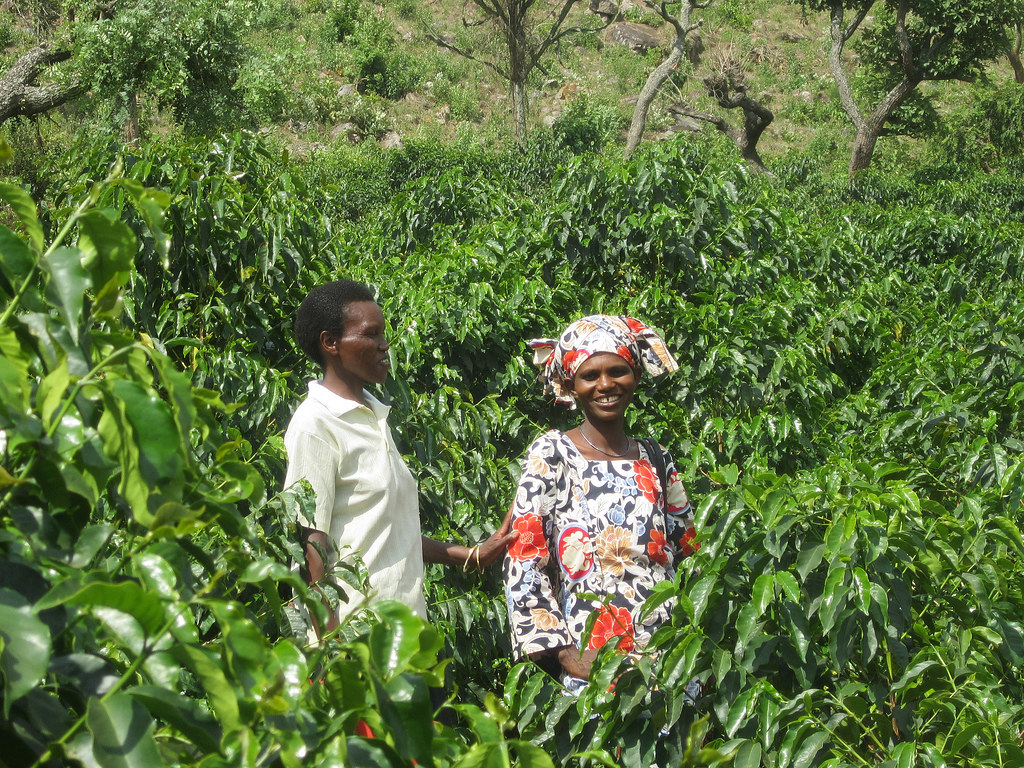
The pickers on our partner farms only take the ripe red cherries. They leave the green ones and come back to the same branch again in a few days. This selective hand-picking sounds simple but it requires experience and attention that a machine cannot replicate. One batch of unripe cherries mixed into the rest can drag down the flavor of everything around it.
Selective hand-picking · Only the ripe red cherries · Great Lakes Region
"The knowledge of when to pick, how to ferment, how long to dry is not written down in any manual. It lives in the people who learned it from their parents."
After picking the cherries go to the washing station the same day. Speed matters here. Coffee that sits too long in the heat starts to ferment in a way that is hard to control. The farmers know this. The rhythm of the harvest is one that they protect carefully. We are proud to work with farmers who take this kind of care.
Find Your Ritual.
Ritual, min read
The Right Grind: The Most Overlooked Step in Your Ritual
Most people who care about coffee spend a lot of time thinking about the coffee itself. They think about the origin and the roast and the brewing method. What they underestimate is what happens between the bag and the brewer. The grind is the step that changes everything and it is almost always the reason a good coffee disappoints.
Coffee begins going stale the moment you grind it. The surface area explodes. The gases escape. The volatile compounds that carry all the interesting aromas start to dissipate in minutes. Pre-ground coffee from a bag is already a compromise before you even start.
The grind · The step most people rush
But beyond freshness there is particle size. Different brewing methods need different particle sizes to extract properly. A French press needs a coarse grind because the water and coffee spend a long time together. A pour-over needs medium to medium-fine because the water moves through more quickly. An espresso needs fine because the water passes through under pressure in about thirty seconds.
If your grind is too coarse for your method the water rushes through without pulling out enough flavor and the result is thin and sour. Too fine and the water struggles to pass through and you extract too much. The coffee tastes bitter and harsh.
"The grind is the step between the bag and the brewer that most people rush. It is also the single change that will make the biggest difference to your cup."
Our recommendation for Nyanza Estate and Highland Reserve is a medium to medium-fine grind for a pour-over or an Aeropress. Both coffees are fully washed and clean and they reward a method that gives you clarity and brightness. Grind right before you brew. Use more coffee than you think you need. And slow down.
Find Your Ritual.
Ritual, min read
Cold Water, Better Coffee: The Variable Nobody Talks About
Ask a barista what makes a great cup of coffee and they will probably talk about the coffee itself, the grind, the ratio, the temperature of the brew water. What almost nobody mentions is the water before the kettle. The cold water that goes in at the start.
Water is not just a carrier for coffee. It is an active ingredient. The mineral content and the pH of your water affect how extraction happens at the molecular level. Water that is too soft lacks the minerals that help pull flavor compounds out of the ground coffee. Water that is too hard has minerals that actually block extraction and make everything taste flat.
The ritual · Water as ingredient · Not just carrier
The ideal brew water for specialty coffee has a total dissolved solids count somewhere between 75 and 250 parts per million with a balanced mix of calcium, magnesium, and bicarbonates. You do not need to test your water. But you should know that if your tap water tastes strongly of chlorine or is very hard you will not get the best out of a coffee like Nyanza or Highland.
Water and terroir · The Great Lakes Region · Tanzania
"Water is not just a carrier. It is an active ingredient. The minerals in your water affect how extraction happens and whether those interesting flavors actually make it into your cup."
The simplest fix is a basic carbon filter on your tap. This removes chlorine and most off-flavors without stripping all the minerals. If you want to go further a few specialty coffee companies now sell mineral packets you can add to distilled water to dial in the exact profile. We know this sounds like a lot for a morning cup. But the rest is the coffee's job. And that part we take care of.